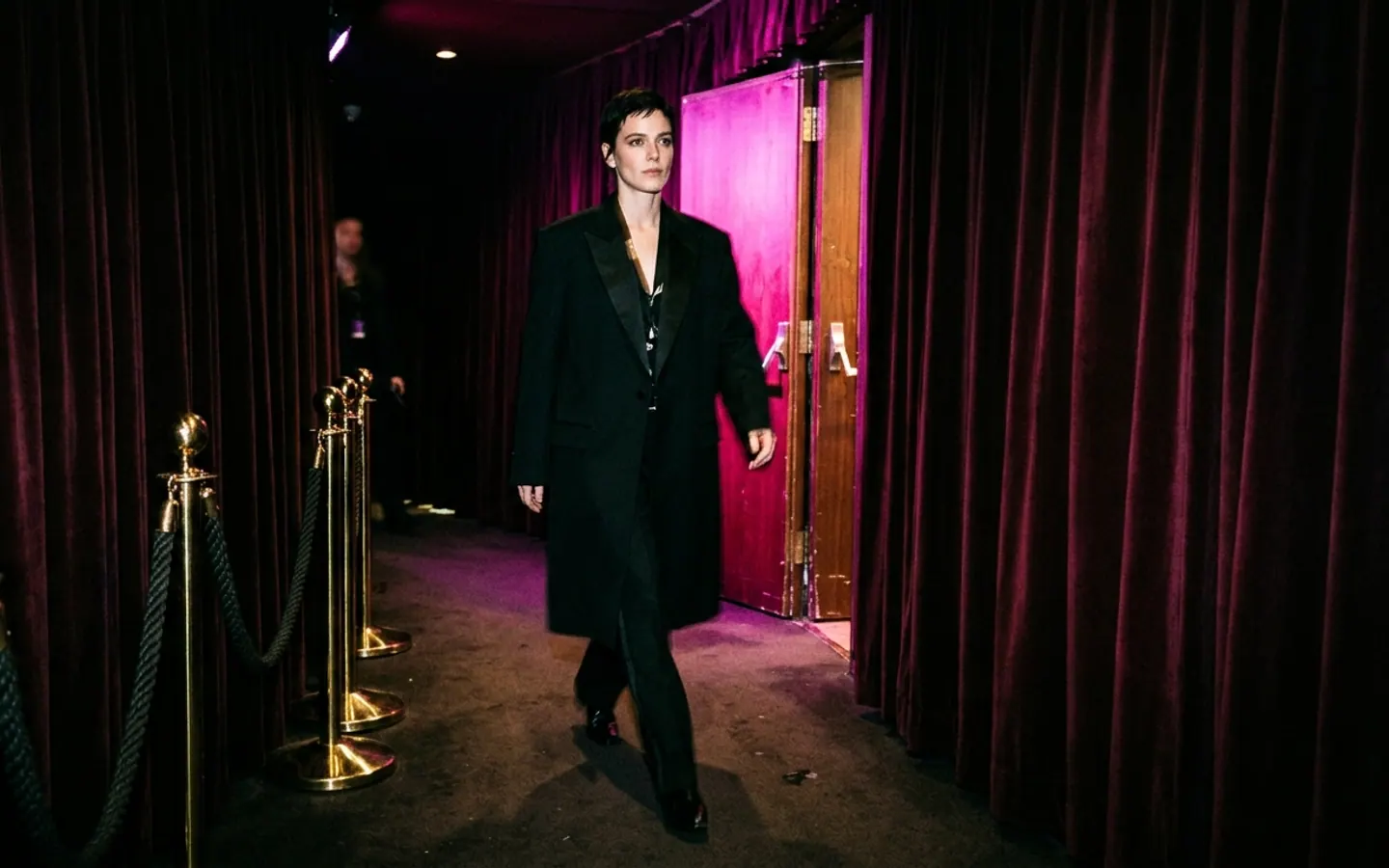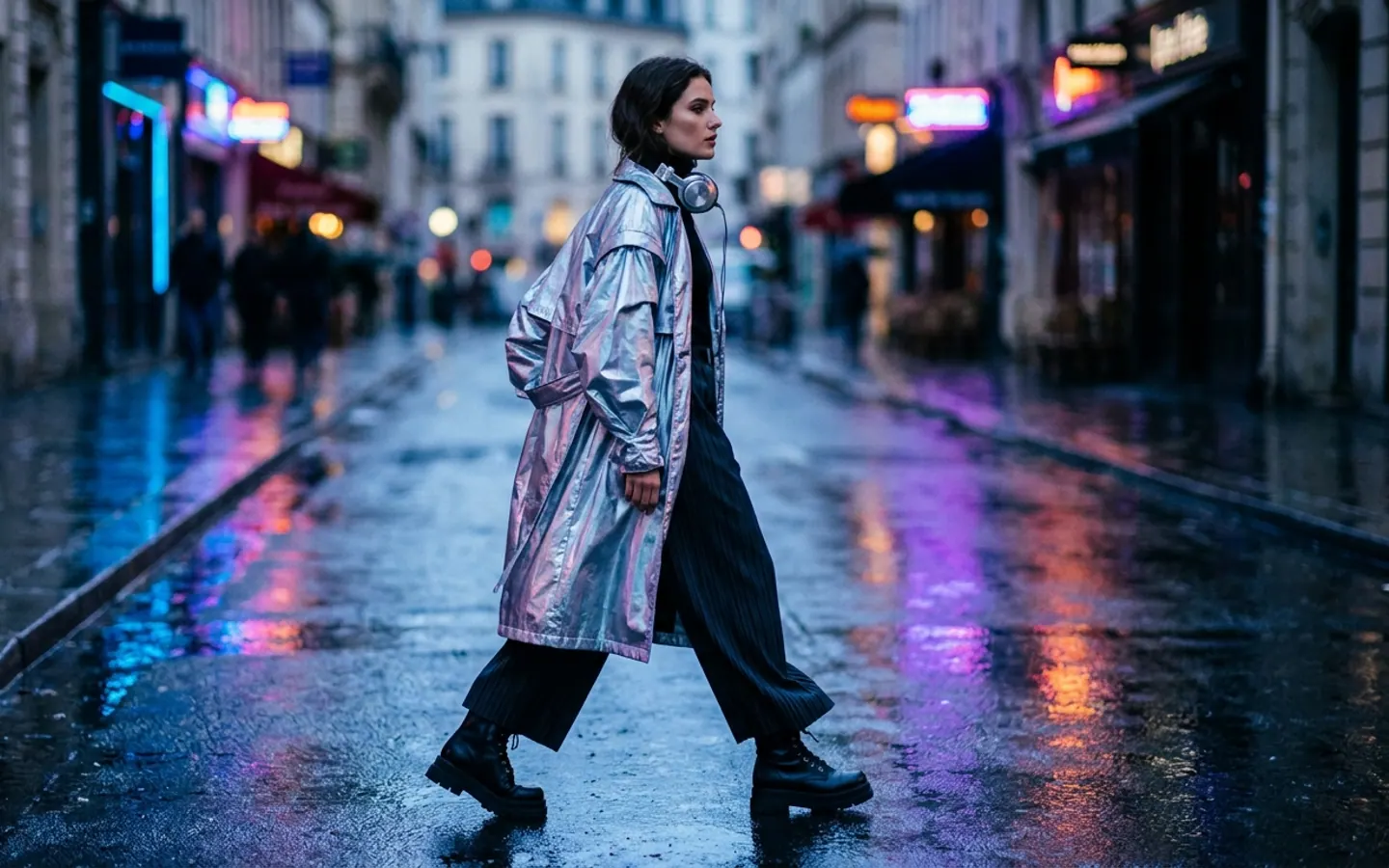
Step out of Seongsu Station during an evening downpour and the sidewalk reads like a study in industrial textile engineering. Young architects, graphic designers, and session musicians are wearing ankle-grazing trench coats cut from 70-denier metallic polyurethane-coated nylon, paired with Goodyear-welted lug boots and brushed stainless over-ear monitors.
Membrane Mills Meet Savile-Style Pattern Cutting
For years, weatherproof outerwear forced buyers to choose between Alpine hiking shells in neon safety colors or heavy cotton gabardine that soaked through after twenty minutes of monsoon rain. Independent labels in Seoul bridged that gap by sourcing Korean three-layer breathable membranes—rated to 20,000 millimeters of hydrostatic pressure—and handing the bolts to classically trained coat makers.
Inside the workshops, seams are heat-welded to 12-millimeter tape tolerances while raglans and inverted back vents drape with the fluid volume of 1980s runway wool. Buyers in Paris and Milan have taken notice, placing wholesale orders alongside the archival deadstock pieces highlighted in Inside the Paris Fittings Turning Mill Surplus Bolts Into Runway Tailoring.
Hardware as Daily Jewelry
Look closer at the styling and every accessory serves a mechanical purpose: anodized carabiner key loops, matte-silver storm flaps, and braided headphone cables tucked cleanly inside storm plackets—a commuter ritual explored further in The Wired Headphone Index: Why Tactile Studio Gear Owns Commuter Style. Durability has become the sharpest flex on wet city asphalt.
Seongsu Bureau / H. Park
Reader Dispatches (0)
MODERATED DESKNo reader dispatches on this story yet. File the first response below.