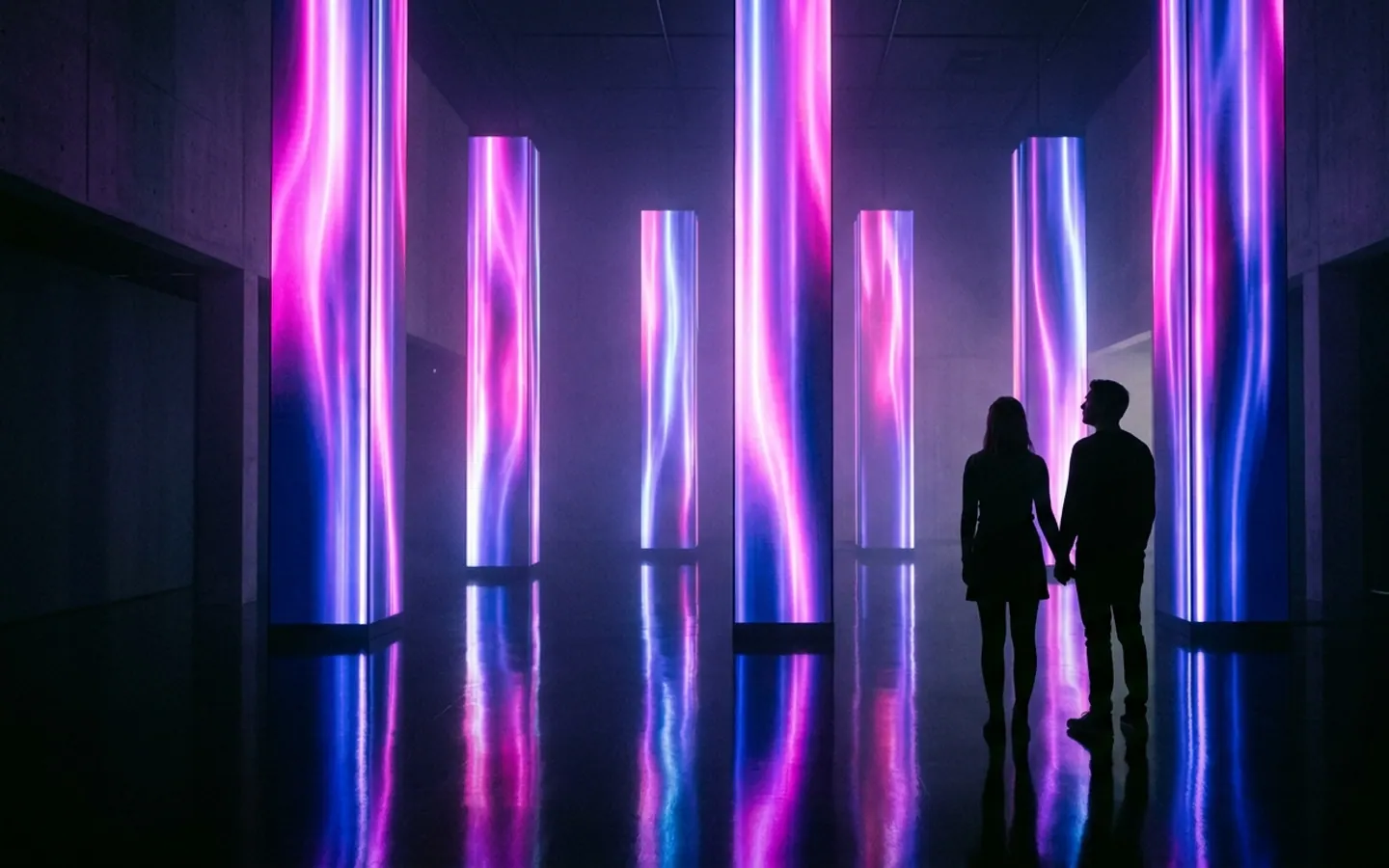
At 11:30 p.m. on a chilly Thursday, the line snaking around a decommissioned turbine hall isn't waiting for a techno headliner—at least not in the conventional sense. Visitors check their coats, step onto a mirror-polished black resin floor, and spend seventy minutes walking among nine-meter vertical columns of custom-diffused magenta and ultraviolet diodes synchronized to 36-hertz sub-bass pulses.
Spatial Code Written From Scratch
Unlike commercial 'immersive' projection rooms that slap stock paintings onto drywall, this wave of kinetic spatial studios writes custom C++ and DMX shaders driving physical glass louvers, smoke curtains, and directional planar speakers. Ticket prices stay accessible—sixteen euros for students after 9 p.m.—turning municipal art spaces into genuine nocturnal social hubs.
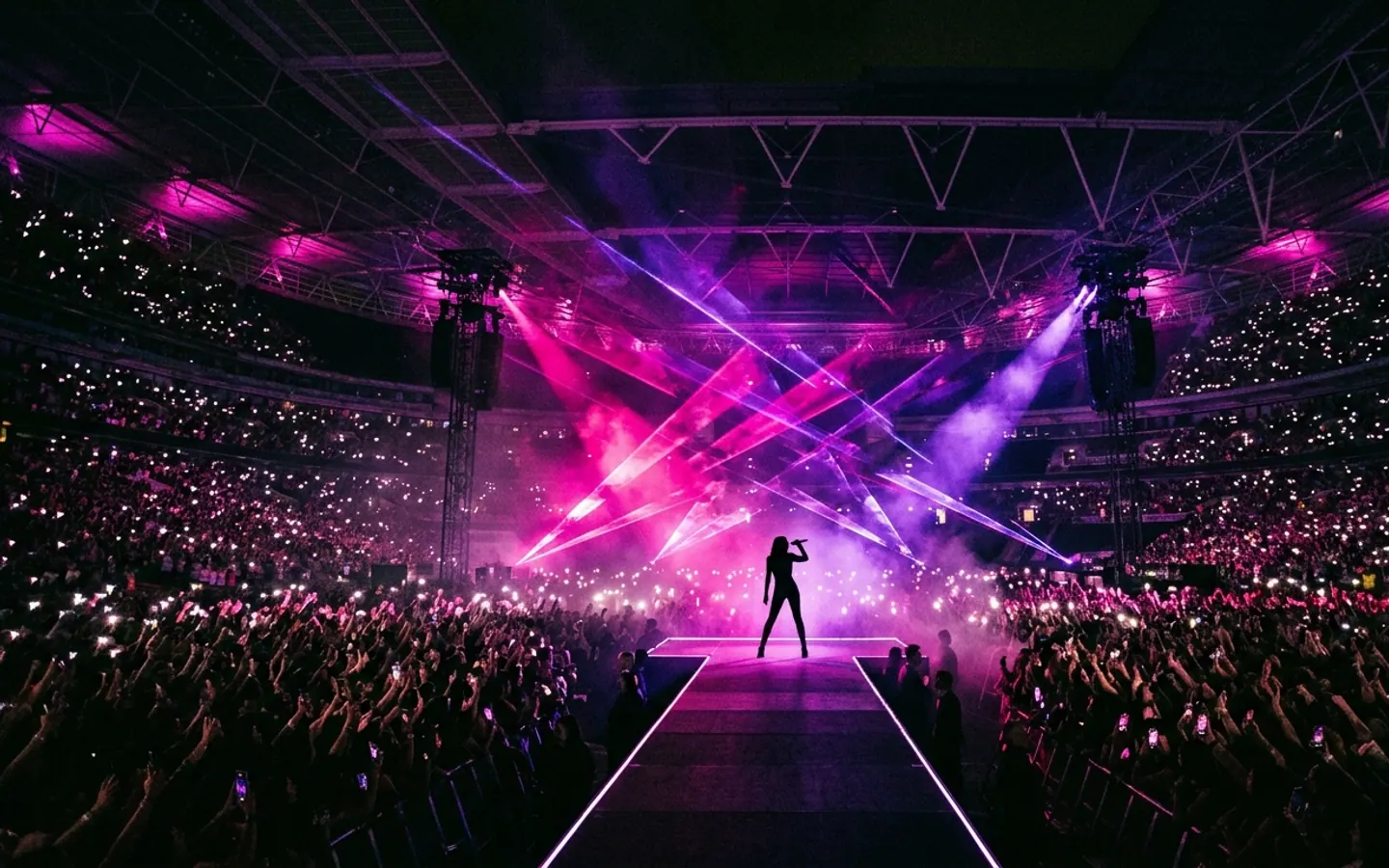
Visual coders behind these monoliths frequently cross-pollinate with arena concert designers featured in Inside the 360-Degree Stadium Catwalk Reshaping Arena Pop Touring, testing beam optics in galleries six months before scaling them to stadium rafters.
Live Broadcasts From the Gallery Floor
Several exhibitions now partner with independent radio collectives from The Four-Hour Broadcast: How Indie Culture Desks Outlasted Short Clips to stream ambient midnight sets directly from the exhibition hall.
Kraftwerk & Tate Desk / E. Lindqvist
Reader Dispatches (0)
MODERATED DESKNo reader dispatches on this story yet. File the first response below.