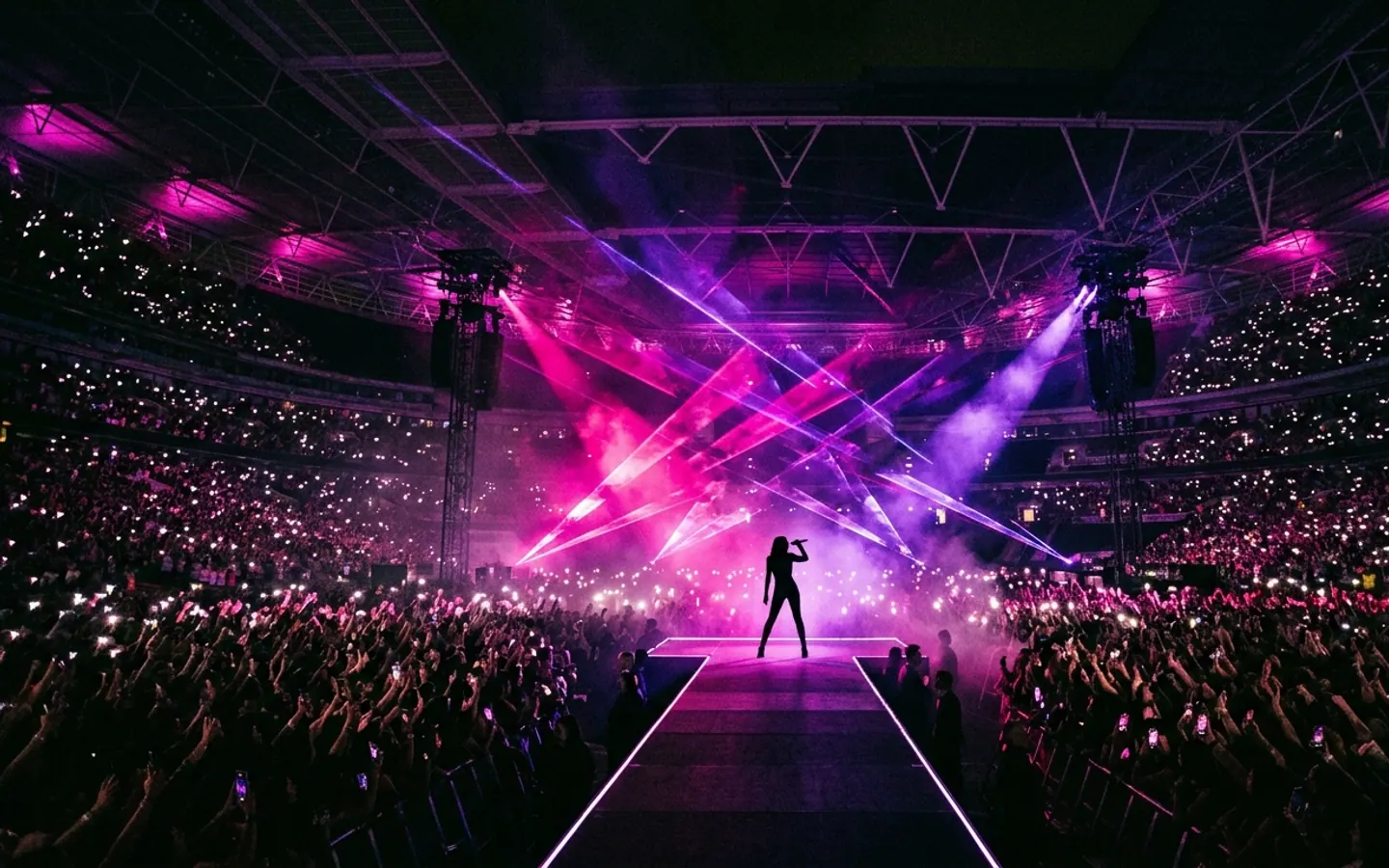
Walk onto the floor of a 22,000-capacity arena in 2026 and the first thing you notice is what has vanished. The 18-meter black steel delay towers and cavernous proscenium arch that dominated stadium pop for two decades have been replaced by a razor-thin 90-meter brushed aluminum runway bisecting the entire bowl. By opening the seats behind the traditional stage, promoters unlock an extra 3,400 tickets per night while putting the performer within 24 meters of the upper concourse.
Trading LED Megastructures for Laser Geometry
Production directors interviewed across London, Los Angeles, and Tokyo point to freight weight as the quiet catalyst. Hauling 420 square meters of touring LED panels required nineteen articulated trucks per leg and 48 hours of rigging before doors opened. The new generation of in-the-round pop staging cuts steel tonnage by 38 percent, relying instead on programmable magenta and ultraviolet beam arrays, recessed floor strobes, and hydraulic B-stages that rise four meters out of the catwalk during acoustic bridges.
That stripped-back architecture mirrors the tactile studio choices documented in Why Club Producers Returned to Quarter-Inch Tape and Modular Patch Bays, where artists deliberately trade digital excess for physical presence. When a singer sprints down a bare 90-meter spine with only a handheld dynamic microphone and sixteen automated follow-spots, every breath registers across the rafters.
Spatial Speaker Rings and Ticket Math
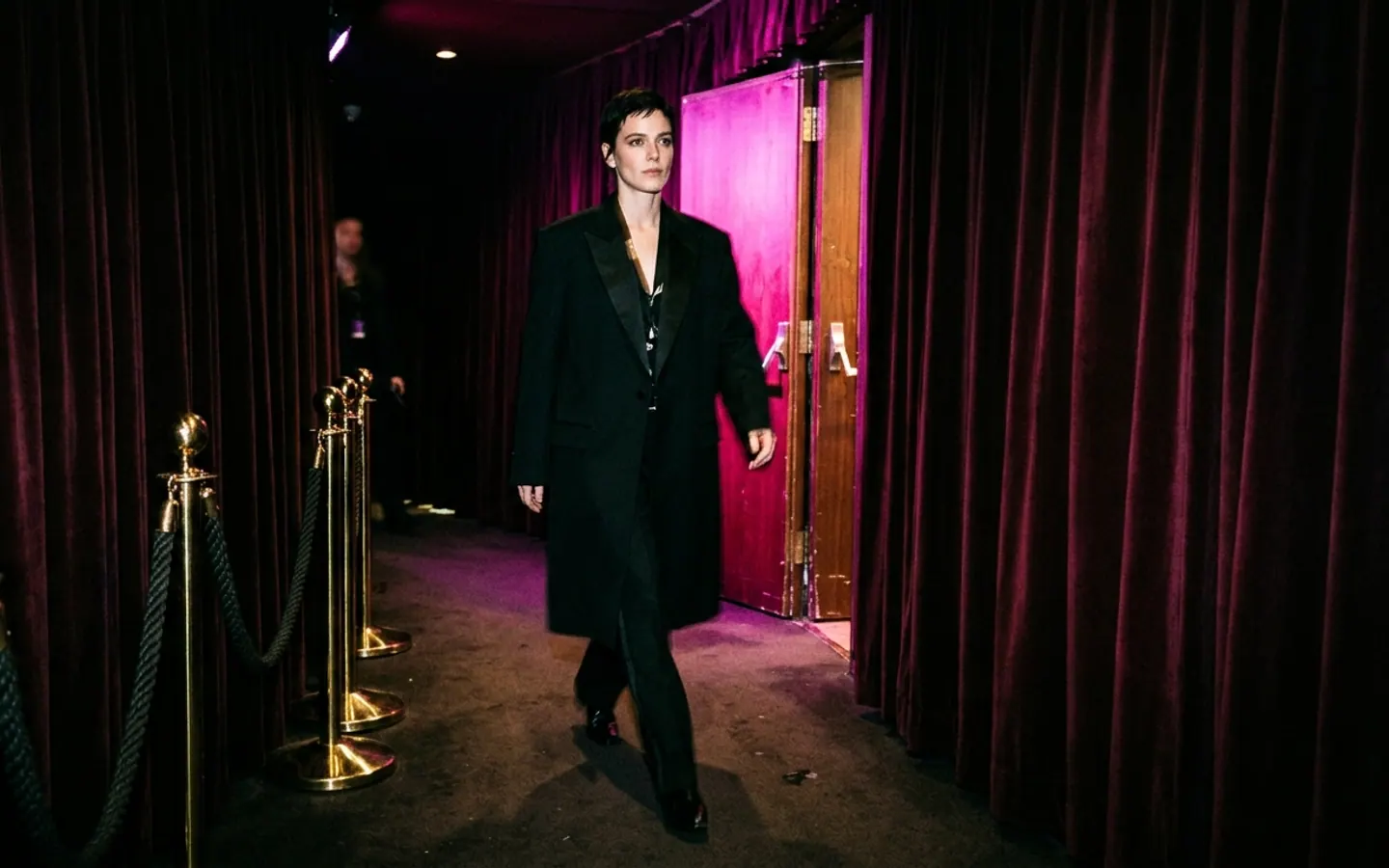
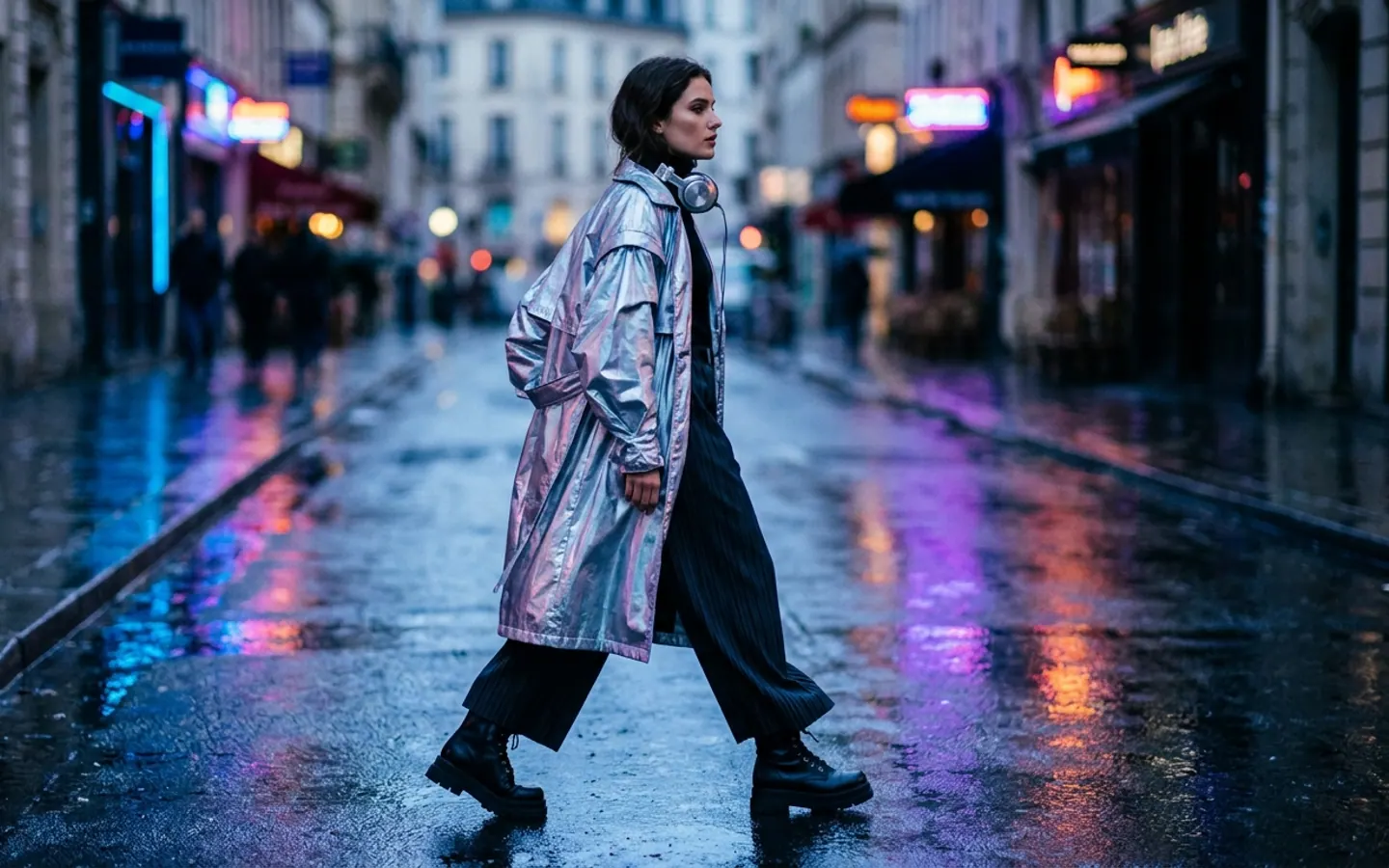
Acoustic engineers solved the old in-the-round echo problem by hanging twelve compact cardioid line arrays in an overhead ring, delaying each zone within 0.4 milliseconds so upper-tier fans hear crisp vocal transients rather than muddy slapback. Merchandising and wardrobe departments have adapted in lockstep: costume designers now build garments with 360-degree silhouettes and reflective piping—an approach borrowed directly from Liquid Nylon and Sharp Shoulders: Seoul's Rainproof Street Tailoring—knowing that 60 percent of fan-shot clips are filmed from behind or above the performer's shoulders.
Shot on 35mm for Strobe Daily / K. Takahashi
Reader Dispatches (2)
MODERATED DESK- Lukas Brenner· HamburgNov 13, 2026
As a touring lighting tech, cutting eight video trucks off a European arena routing saves four hours on every load-out and lets the visual cues breathe again.
- Samira Patel· ManchesterNov 12, 2026
Caught the Manchester arena date from Section 214 behind the old stage end—having the overhead cardioid ring meant we actually heard every harmony without slapback echo off the back wall.