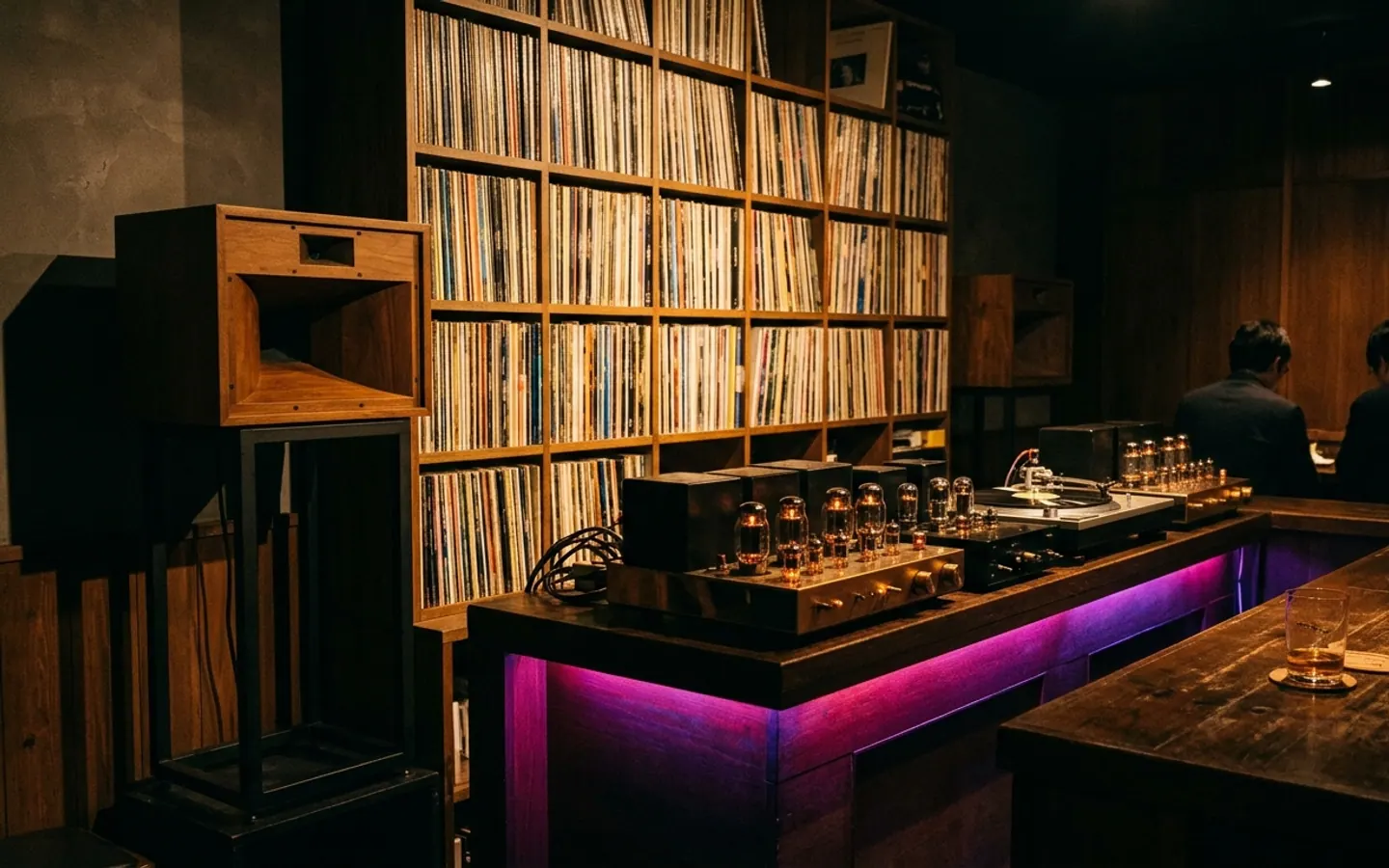
Forget sparklers, velvet ropes, and 108-decibel EDM drops that leave your ears ringing until Tuesday. In neighborhoods from Shimokitazawa to Silver Lake and Lisbon's Príncipe Real, the sharpest evening out happens inside a thirty-four-seat room paneled in perforated walnut, where a selector plays side A of a 1979 Japanese jazz-funk LP from start to finish through vintage Altec Lansing horn drivers.
Acoustic Warmth Built for Conversation
Acoustic carpenters design these rooms around a simple metric: guests seated two meters from the main horn cabinets should be able to speak at normal indoor volume without straining. Tube preamplifiers, rotary mixers without aggressive three-band kill switches, and floating cork subfloors absorb harsh midrange reflections while preserving deep bass punch.
The reverence for warm signal paths runs directly parallel to the recording habits in Why Club Producers Returned to Quarter-Inch Tape and Modular Patch Bays. Several bar owners now double as micro-labels, pressing 500-copy live session records recorded straight off the room's two-track master bus.
House Rules That Guests Actually Welcome
Most rooms post a polite card beside the coaster: keep phone screens dimmed and skip flash photography. Far from feeling restrictive, younger patrons mirror the analog focus seen in The Wired Headphone Index: Why Tactile Studio Gear Owns Commuter Style, staying for two yuzu-hinoki highballs and reading liner notes cover to cover.
Shibuya Desk / Y. Watanabe
Reader Dispatches (1)
MODERATED DESK- Kenji Mori· OsakaNov 8, 2026
Horn speakers running off low-wattage tube amps let you feel the upright bass in your ribs while still talking quietly across the counter. Zero ear fatigue the next morning.